


The Great Bifurcation - When Consumers Get Caught in the Crossfires of AI Providers

By Fahmid Alam
Just a few years ago, the words “artificial intelligence” instilled people with an electrifying mix of excitement and concern, seeing it as a strange gift that came wrapped in possibility for all the different ways society could be developed. But even then, AI had been designated as a service, and many overlooked the implications of how that would shape the way it was used. With grand-scale demand that was growing at an exponential rate, companies and governments ran the risk of losing their hold on extremely lucrative consumption patterns if they weren’t quick to step in and regulate it.
People were optimistic about the potential AI brought for change because they saw it in service of innovation, but the truth is that the only innovators it worked in service of were its regulators. Which is why despite expectations, its function today is devastatingly simple: A mirror of the trends that industries want consumers to stay within at the time. And the AI market has gradually shifted to more comfortably reflect this.
In February, The Department of Defense (DOD) ran into a dispute with Anthropic, the parent company of Claude AI. Having signed a contract for $200 million in July 2025, their partnership went south quickly when Anthropic set guardrails on its software, barring the DOD from using its models for mass domestic surveillance or fully autonomous weapons during the Iran war. While Pentagon spokesperson Sean Parnell claimed that the DOD had no interest in imposing either of these on American citizens, no statement was made to acknowledge their capacity for doing so if access to models was left entirely unrestricted, under the guise of ‘all lawful purposes’.
After a few days of both sides at a stalemate, Anthropic was subsequently blacklisted, being labeled a ‘supply chain risk’, a title only previously given to foreign organizations that were said to threaten national security. All other defense vendors and contractors who went on to work with the Pentagon in the future would have to confirm that they were not using Anthropic’s models for these operations. Despite this, their technology was still continuing to be used by the government in Iran at the same time, even after the blacklisting.
Because this new classification jeopardized the hundreds of millions of dollars Anthropic had in contracts with both the government and other private parties now influenced by the news, the company filed a lawsuit against the Trump administration. As Anthropic had complied with all technical and security requirements prior, they argued that a government use of power in retaliation against protected right to speech was ‘unprecedented and unlawful’. Many big tech names including Microsoft and Nvidia filed legal briefs supporting Anthropic in its legal battle. Though they also work closely with the government and the DOD, Microsoft in particular came out and said that the blacklisting could cause “broad negative ramifications for the entire technology sector” since many companies had existing contracts with Anthropic that would then have to be revised.
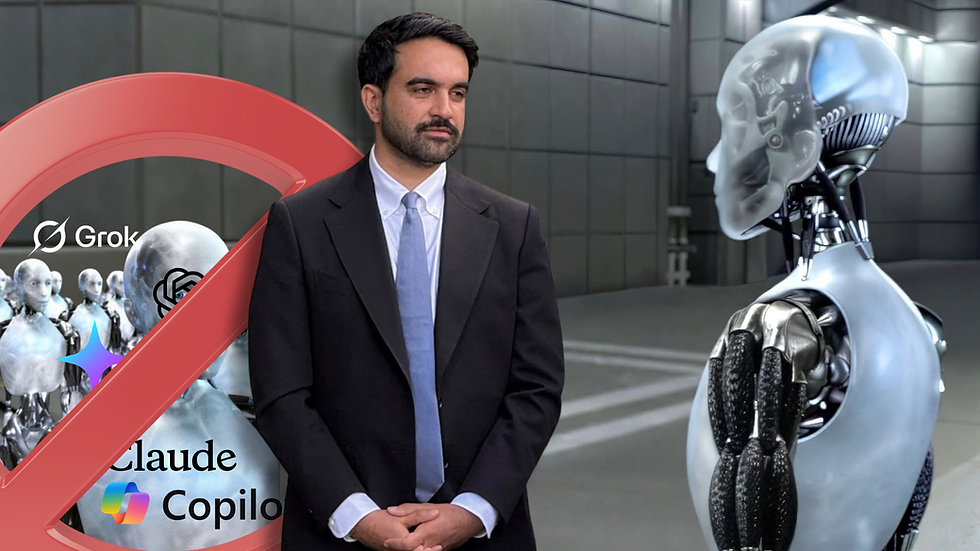
The same day in February that Anthropic was dropped from its contracts with the government is the same day that OpenAI came in and made a separate deal with the Department of War, fulfilling the same role that Anthropic had just lost. Essentially, Anthropic’s blacklisting set the stage for a grand division of the tech industry. On one side are providers like OpenAI and the government, who want to optimize artificial general intelligence (AGI) to more deeply personalize the way it interacts with its users. On the other side are providers like Microsoft and Anthropic, who prioritize the confidentiality and security of data input.
Following this, in the last week of April, Microsoft and OpenAI announced an amendment to their former partnership, which had been exclusive from 2019 up until now. Going forward, OpenAI could run on providers other than Microsoft Azure, including AWS; very much to the chagrin of Microsoft’s early fears that OpenAI would run into the arms of Amazon.
While Microsoft no longer makes revenue payments to OpenAI, they’ll continue to receive dividends from them until 2030, and retain intellectual property rights to OpenAI software through 2032. Microsoft is now free to support rivals of OpenAI without being accused of monopolizing their services across the industry, while still profiting from the separation. And in the process of its expansion, OpenAI would rather make payments to Microsoft than continue to be owned by and bound to them.
So why does this matter for the average consumer?
The rivalries may be between these different AI providers, but ultimately the ones who reap the costs of their conflicts, including the actions they take on their own to resolve them, are the consumers. Providers no longer have incentives to make the data transfer process seamless for you. Say that you use a Microsoft agent for one set of data and an OpenAI agent for another. Because the agents are now unaligned and competing with each other, they may refuse to cooperate. That means you end up paying higher costs not for a higher level of intelligence, but because data integration is now locked behind higher paywalls.
Known as a silo premium, providers send the message to customers that importing their data to or from a rival provider’s ecosystem is a privilege they must earn. And with the introduction of this cost comes the pressure for customers to ‘pick a side’ and stay with one provider, rather than to take more hits financially because they chose to diversify.
This is a development that has already begun. On May 1, Microsoft made their Frontier (E7) suite available. At $99 a month, the E7 tier markets “Model Diversity” as one of its key features, with Copilot automatically selecting the best engine among Claude and OpenAI models for a given task. If you used them separately, then your data across platforms would be split without a means of integration. Additionally, Microsoft is bundling high-tech features such as Work IQ and the Agent 365 into the E7 tier exclusively. So until a premium was to be paid for this higher tier, different AI models would not be able to work together to complete tasks from the same data set.
In the end, clashing personal interests of big tech companies only paved the way for them to charge consumers higher prices for the quality of our results. Microsoft has effectively positioned itself as a landlord of users’ data and normalized this as something customers can expect to encounter in the future when paying for software. A sharp pivot from the early days of inspired speculation, today the motto is more like “ask not what AI can do for you — ask what you can do for AI”. Depending on the alignment of companies at different times, every user is left to question how much they’ll be willing to pay just to access and use their own data.

Fahmid is a third-year at The City College of New York, majoring in psychology and looking to pursue computational neuropsychology after graduation. What interests him most is seeing how people differently make peace with and get the most gratification out of their lives, and what that difference can say about their personality structure. Joining The Paper has allowed him to connect more with the community at CCNY and pick their brain on different matters. When he isn't overthinking, he enjoys traveling, going to concerts, and thrifting for a good deal.


Comments