


Breaking the Script of Taxation - The Hope Created by Zohran Mamdani’s New Pied-A-Terre Tax

By Fahmid Alam
“When the poor have nothing else to eat, they will eat the rich.” Once a sentiment made by Jean-Jacques Rousseau during the wealth inequality of the French Revolution, the words have been reclaimed and neatly repackaged into the ‘eat-the-rich’ movement of today, a preemptive defense against the rising disparity levels between classes that deems it necessary once again.
Particularly, from January 2025 to January 2026 alone, the Consumer Price Index (CPI) shows rent has increased nationally by 2.8%, utility prices by 6%, and tariffs have most notably cost the average household between $1,000 and $1,700 a year. All of this happened in spite of the very promises made by the current administration to create affordability during the 2024 election campaign.
Even so, getting politicians to follow through on implementing meaningful systemic changes that echo these demands has always been a bit of a challenge. At least, until recently. On April 15, widely known as National Tax Day, Zohran Mamdani’s team uploaded a video announcing plans to impose a pied-à-terre tax with the support of the New York State Governor Kathy Hochul. This would be a yearly tax paid on secondary residences worth over $5 million.
The intention is to make sure that those who own vast amounts of luxury real estate in “the greatest city in the world,” as put by Mamdani himself, can still fairly contribute towards the welfare of the common people whom the city serves, especially if they don’t live here or pay the income taxes of residence as everyone else. Otherwise, those with the greatest ability to influence the current living conditions end up saddling everyone else with the responsibility of withstanding them.
In January 2026, the NYC comptroller estimated our budget gap to be $2.2 billion for the current fiscal year, which then skyrockets up to $10.4 billion for the 2027 fiscal year. This change from Mamdani is said to bring in at least $500 million annually in recurring city revenue. With a new administration and new objectives, this is a new beginning. It’s now important to think about what broader patterns this tax being approved can pave the way for.
So, let’s follow the timeline of how Kathy Hochul’s stance on tax raises has changed.
In June 2025, she sat down for an interview with PIX 11’s Dan Mannarino, where she was asked about Mamdani’s tax-raise campaign. She began with a defense against affordability, saying, “No, I'm not raising taxes on people at a time when affordability is the big issue.” But when asked specifically about the wealthy, her defense became about not wanting to drive them to Florida, supposedly because their support for the economy and philanthropies was so valuable.
It raises the question of why the same people valued for their indirect philanthropy couldn’t be depended on to more directly aid the everyday New Yorkers facing the same misfortunes.
Later in October 2025, during one of Mamdani’s rallies, she fleshed out her position more to explain that 1.5% of New Yorkers were responsible for a third of the city’s budget and that she feared their mass outmigration when they were the ones holding it up in the first place. That we seem to be in this position of extreme reliance on an ultra-wealthy minority, who aren’t really making decisions we can rely on for our welfare, further raises concerns of how the government has been spending the oath they took to serve us.
The final piece of the puzzle that confirms this skepticism can be found when we dive deeper into the ‘millionaire exodus’ narrative pushed by analysts and politicians alike. A term that hails from the UK to describe mass outmigration as an inevitable result of tax raises, its magnitude has long been overestimated. In June 2025, the Tax Justice Network revealed that migrating millionaires represent a grand total of 0.2% of the global millionaire population, and that between years this number changes mostly by less than 0.1%.
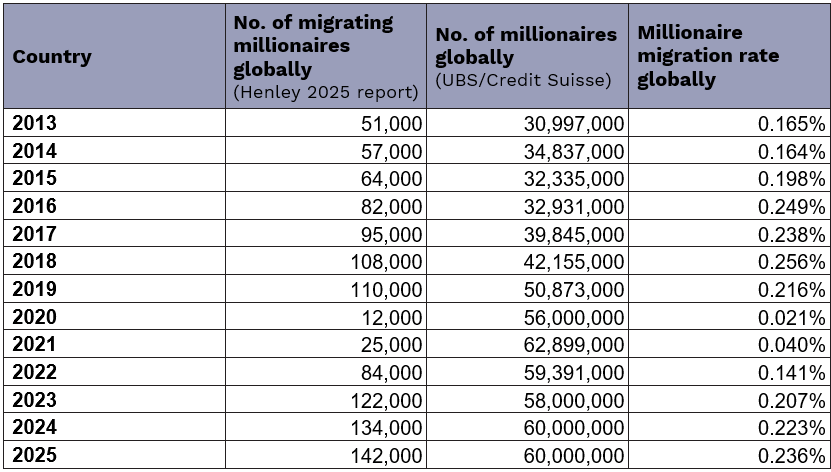
So if mass outmigration isn’t a significant problem at all, the next thing is to wonder what interests politicians like Kathy Hochul are actually protecting. Only through firmly advocating for our causes and accepting no less from our politicians is how we will be able to expose the truth.
But if Mamdani was able to win Hochul’s support in passing this tax, the same one that it seems many millionaires will gladly pay despite all the warnings we’ve been shown saying the opposite, then there’s new promise for the power we as a people have to influence change. That power is an invaluable pillar of support, one needed more than ever in today’s age of No Kings protests.

Fahmid is a third-year at The City College of New York, majoring in psychology and looking to pursue computational neuropsychology after graduation. What interests him most is seeing how people differently make peace with and get the most gratification out of their lives, and what that difference can say about their personality structure. Joining The Paper has allowed him to connect more with the community at CCNY and pick their brain on different matters. When he isn't overthinking, he enjoys traveling, going to concerts, and thrifting for a good deal.


Comments